Low-Velocity Impact Localization in Composite Wings
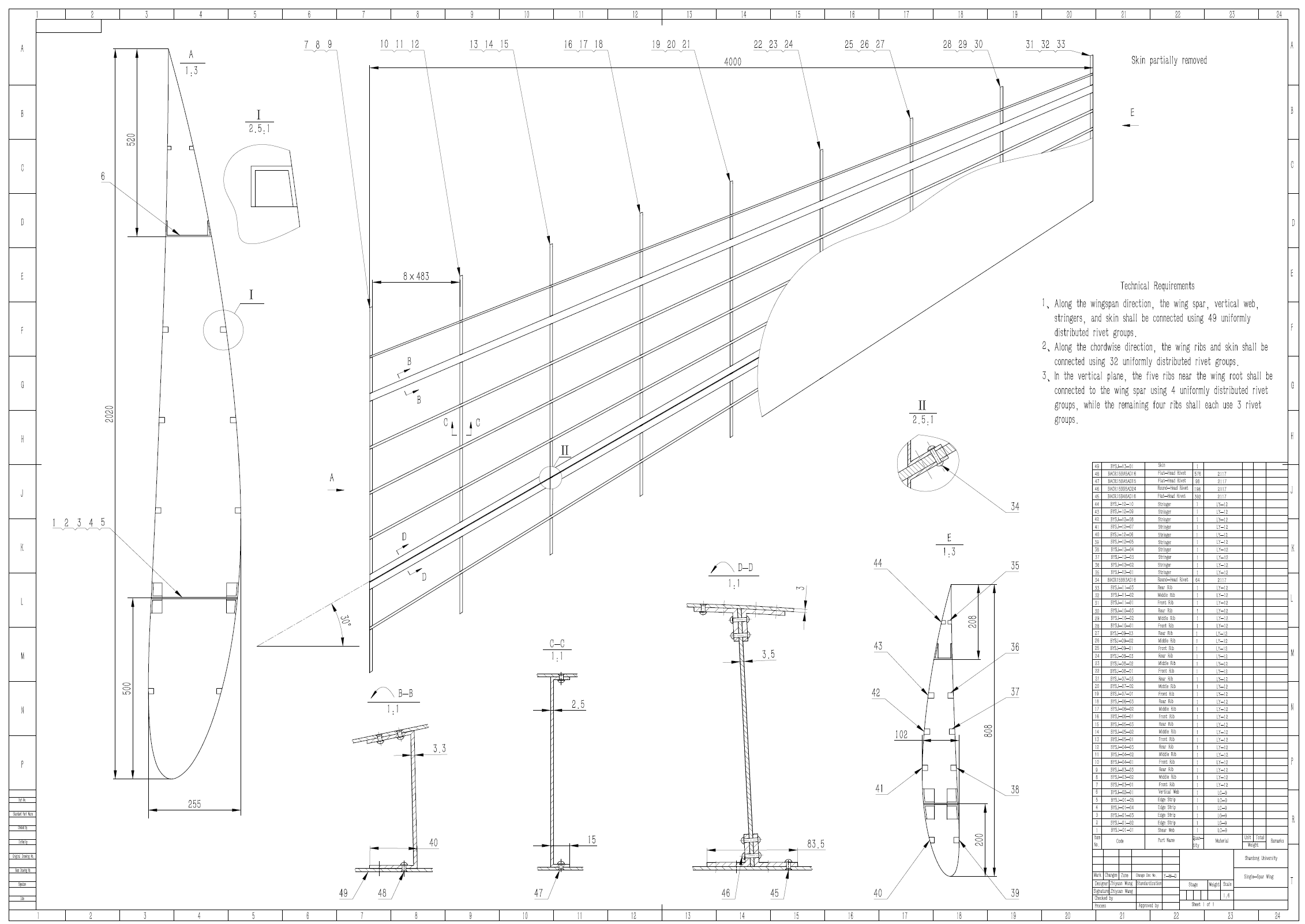
This project explores how low-velocity impacts can be detected and located in aerospace composite wings, where damage often hides beneath the surface but poses serious safety risks. I created a three-dimensional wing model using SolidWorks and produced the corresponding engineering drawings.
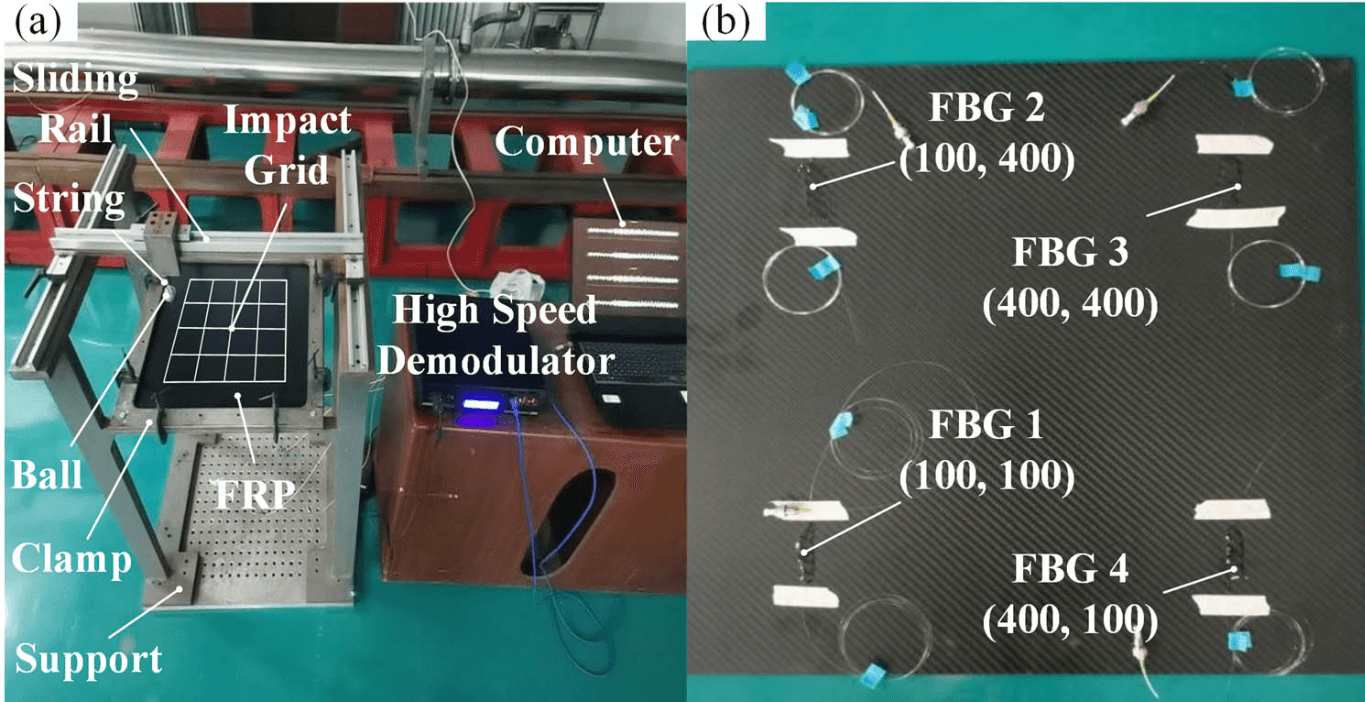
The second image shows the experimental setup, including composite plate, low-speed impact excitation, and Fiber Bragg Grating senser-based strain signal acquisition. By studying Lamb wave propagation under impact, I built a physics-informed framework to extract time-, frequency-, and time-frequency-domain features from sensor data.
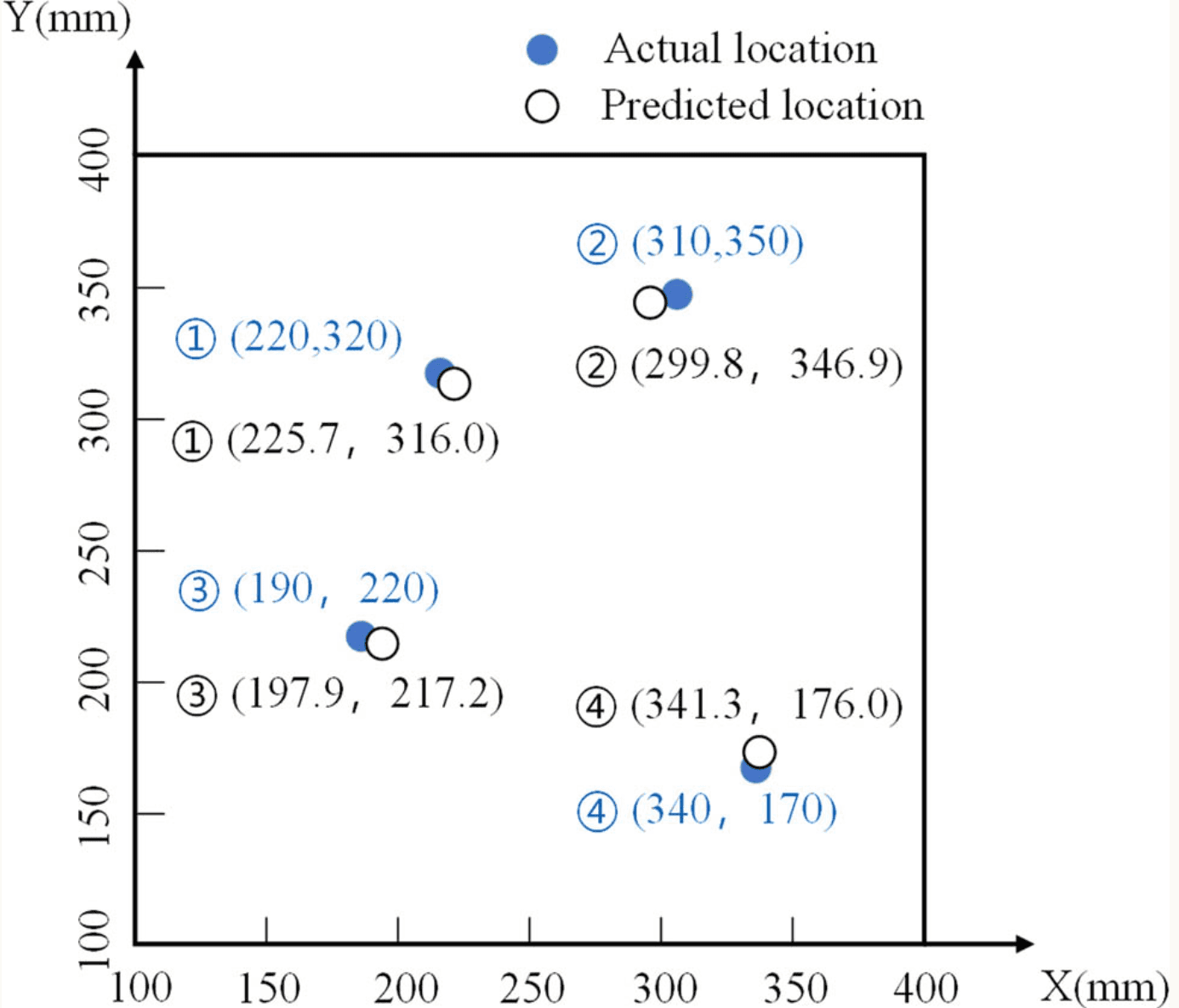
Impact localization strategy is based on a strain-sensor network and a hybrid GA-BP neural network, aiming to predict impact location and energy. Combining physical insight with data-driven learning, the method achieved reliable prediction accuracy and demonstrates a promising approach for structural health monitoring of composite wings.